Project Case Study / Central Hub
Live / OperationalSELF-HOSTED / FULL-STACK / INFRASTRUCTURE
A self-hosted
command center
for my work.
Central Hub is a centralized operations dashboard for tracking projects, tasks, infrastructure, services, and integrations while giving visitors a live, read-only view into what I am currently building.
Next.jsTypeScriptPrismaPostgreSQLLinuxPM2Raspberry PiCloudflare
CENTRAL HUB
All systems operationalDashboard
Raspberry PiPrimary host for Central Hub and supporting services.
Online01 / The Problem
Projects become harder to understand when everything livesin separate places.
As I started building more applications, infrastructure, and self-hosted services, a collection of repositories and notes was no longer enough to represent what was actually running.
I wanted one place where I could see the state of my work, understand what systems were online, track what I was building, and give other people a useful view into that work without giving them administrative access.
Projects
Track active work, project state, and what I am currently building.
Tasks
Keep development and infrastructure work visible in one workflow.
Systems
Monitor the machines and infrastructure supporting the platform.
Services
Surface operational state for applications and supporting services.
02 / Live System
This is not a mockup.
It is running.
Central Hub is deployed on my Raspberry Pi and published through a Cloudflare tunnel at dashboard.etterdigital.dev.
Visitors can browse the same public-facing dashboard I use to monitor my work. The public experience is intentionally read-only.
LIVE DEPLOYMENTdashboard.etterdigital.dev
OperationalThe public dashboard exposes project, task, system, service, and integration information intended for visitors while keeping write access behind authentication.
Open the live dashboard↗PUBLIC MODERead-only
ADMIN MODEGitHub authenticated
HOSTINGSelf-hosted
EDGECloudflare
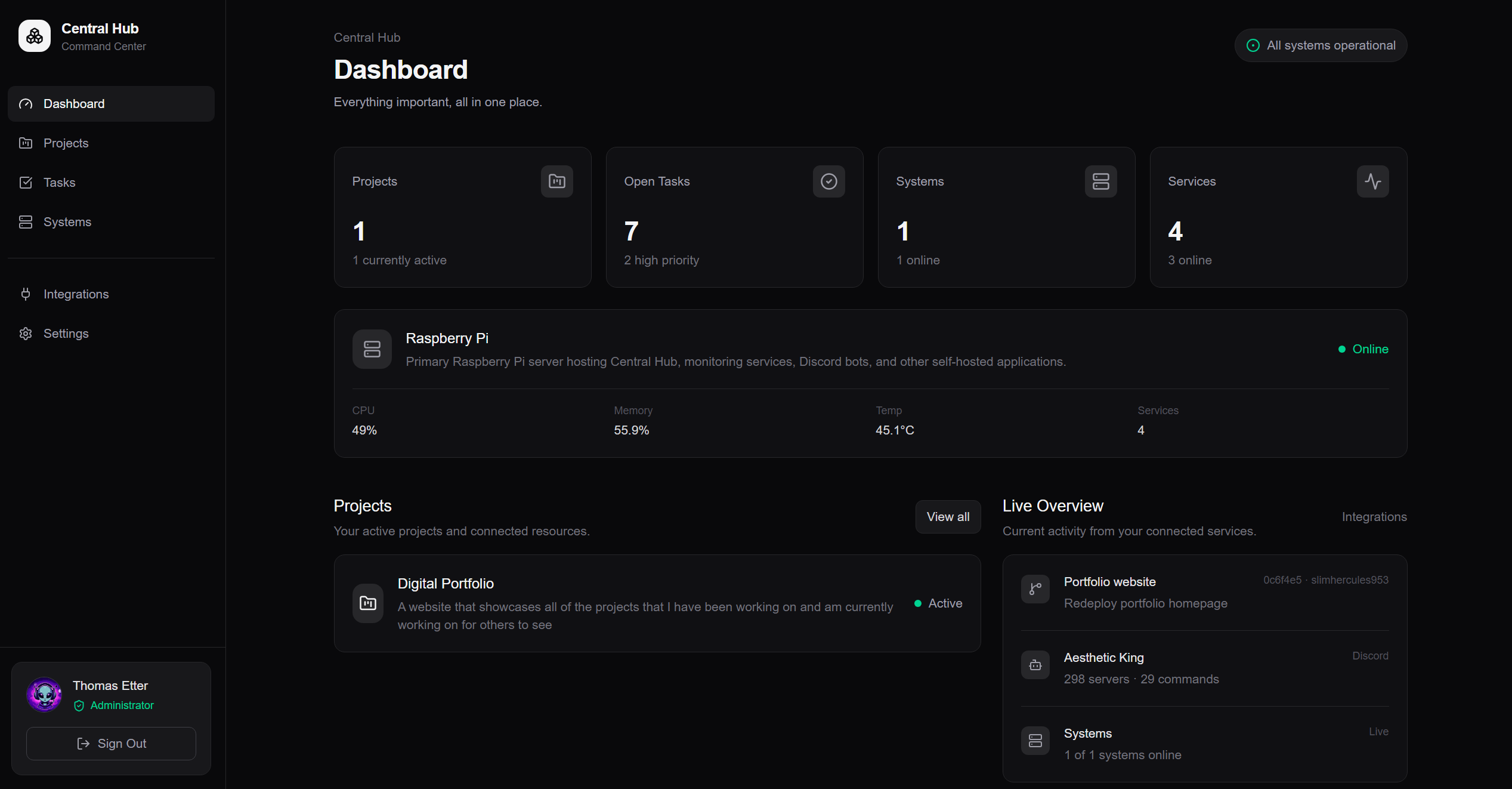
ACTUAL DEPLOYMENT / PUBLIC VIEW
The live Central Hub dashboard.
This is the public read-only interface currently running at dashboard.etterdigital.dev. Visitors can monitor projects, tasks, systems, services, and integrations without receiving edit access.
03 / Application Views
More than
one dashboard.
Central Hub includes dedicated views for projects, tasks, and systems so different parts of my work can be tracked without forcing everything into a single page.
Each view is part of the same public read-only experience. The screenshots below show the application currently running through dashboard.etterdigital.dev.
VIEW / 01
LIVE VIEWProjects
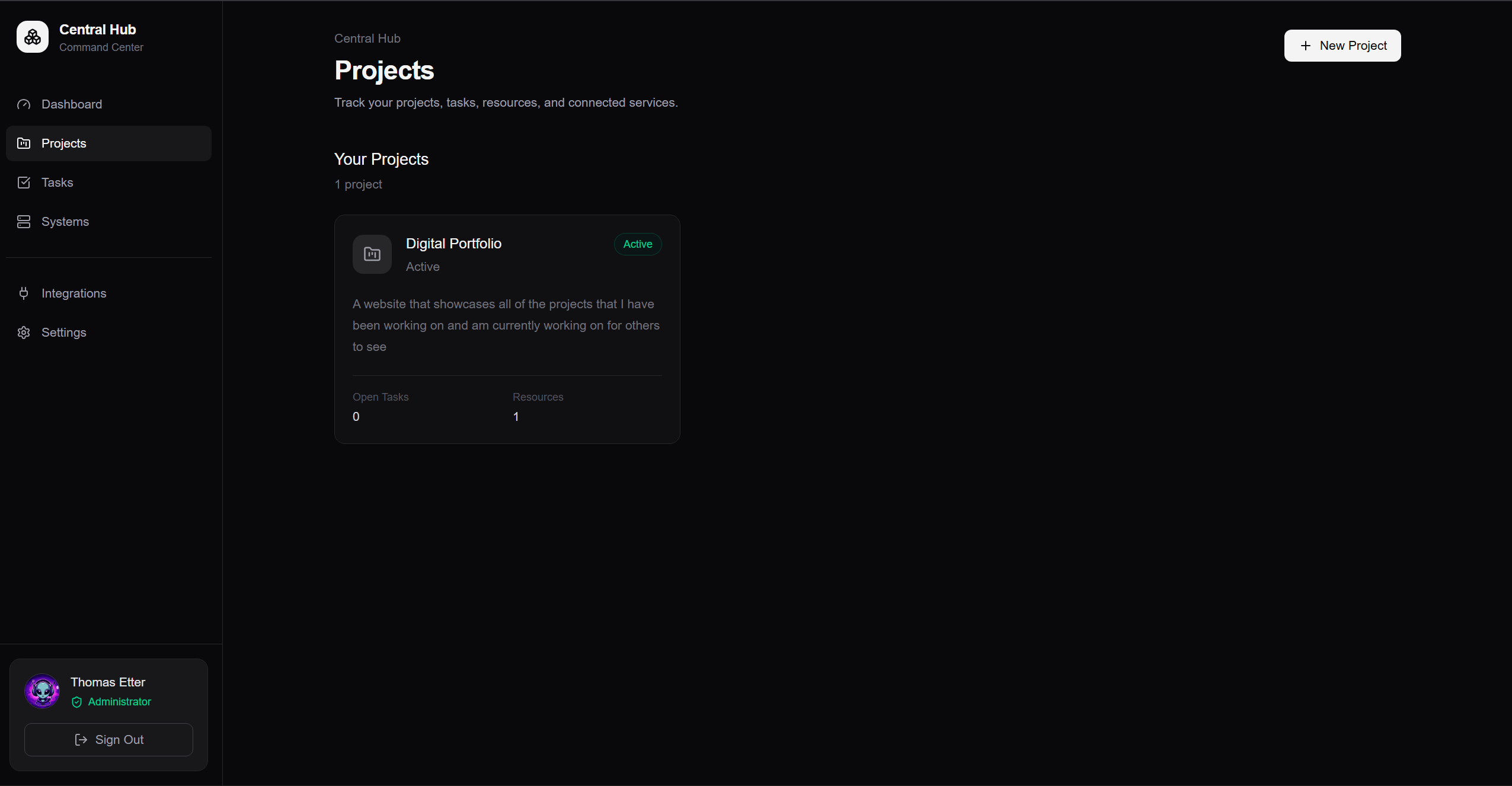
Tracks active projects, their current status, and the work being developed across Etter Digital.
dashboard.etterdigital.dev/projectsVIEW / 02
LIVE VIEWTasks
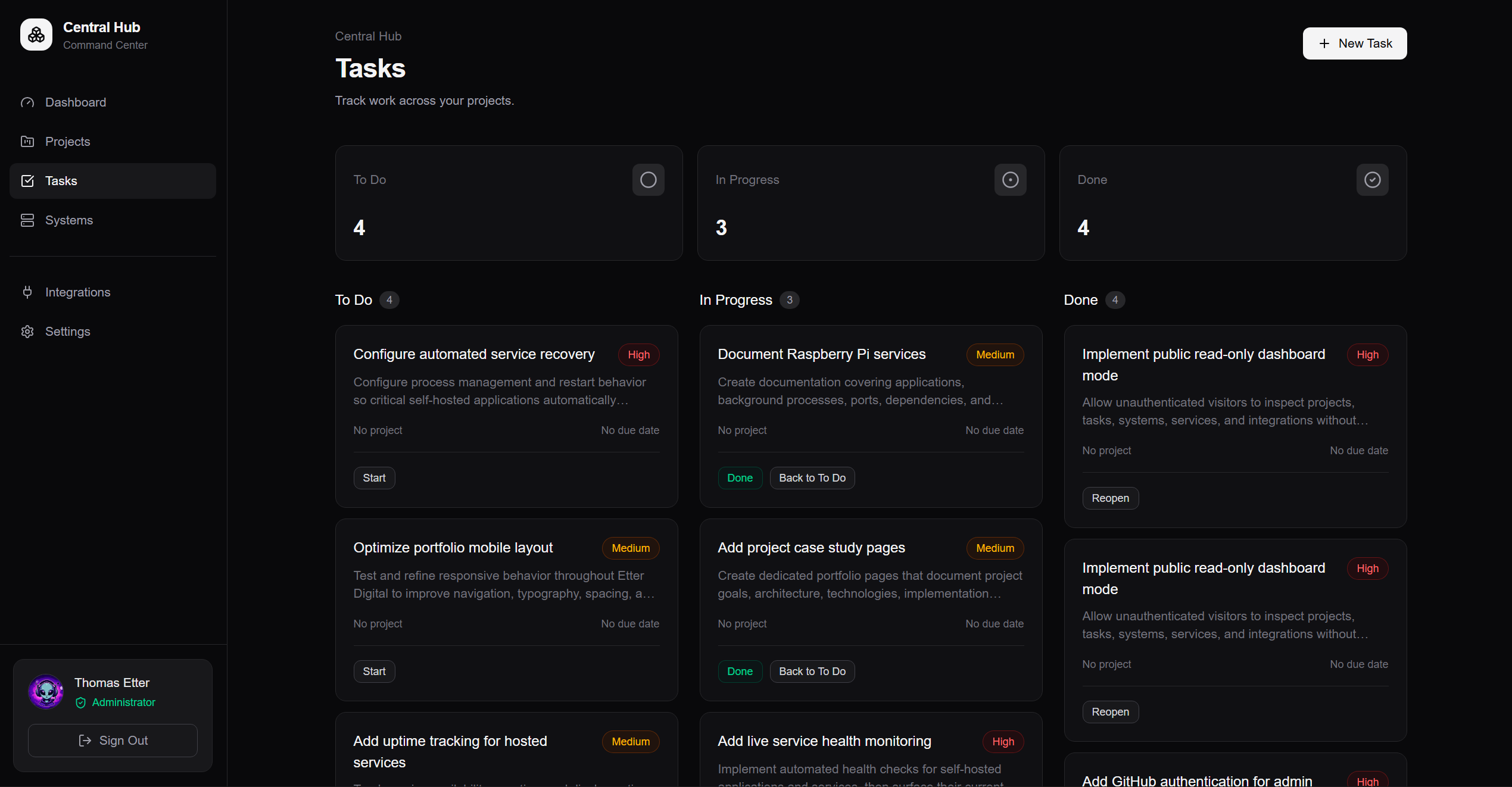
Organizes development, infrastructure, maintenance, and future work into a visible task workflow.
dashboard.etterdigital.dev/tasksVIEW / 03
LIVE VIEWSystems
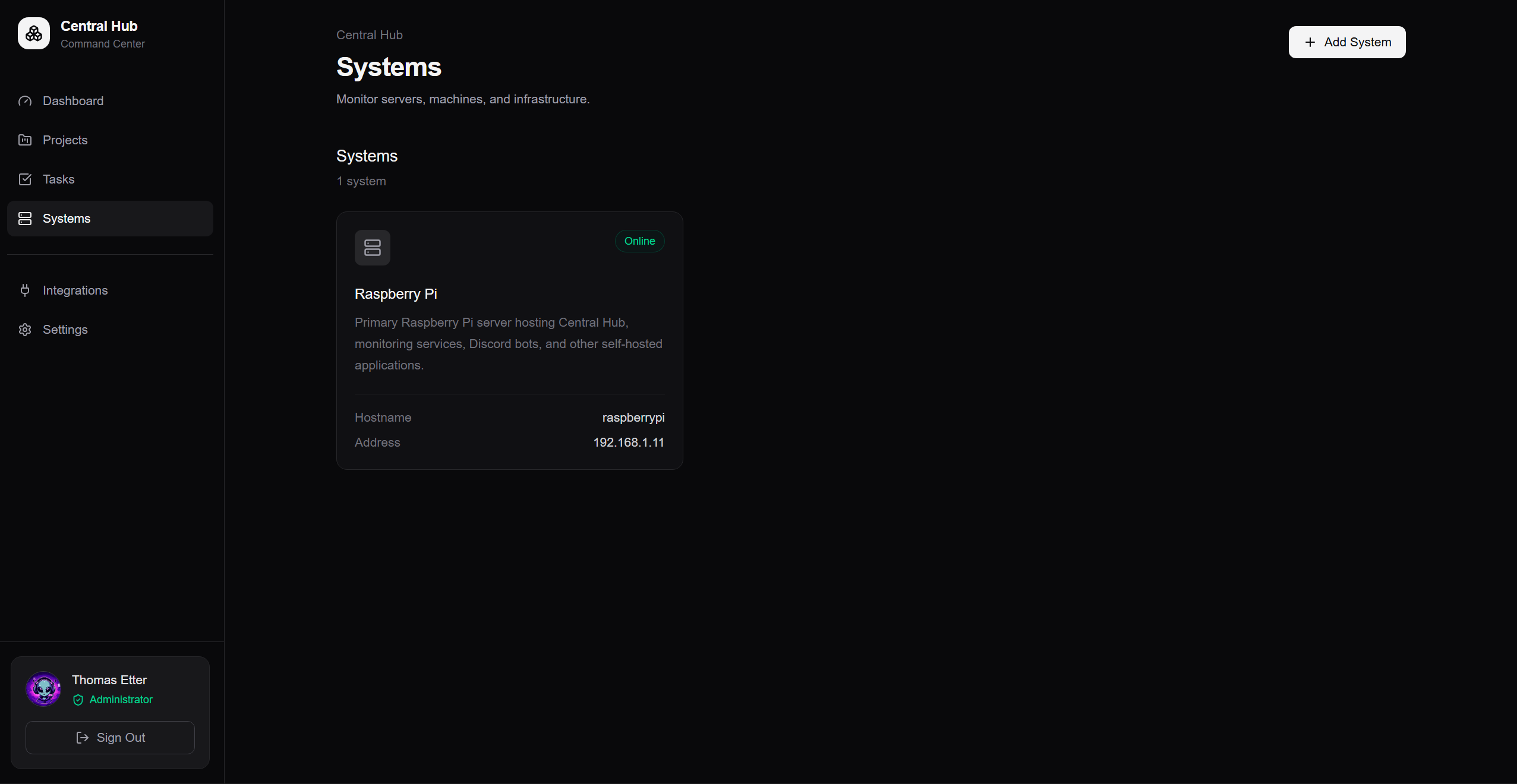
Surfaces infrastructure information and monitored system status so the operational side of the environment remains visible.
dashboard.etterdigital.dev/systemsSELECT ANY SCREENSHOT TO OPEN THE FULL-SIZE APPLICATION VIEW
04 / Architecture
From the internet
to the Pi.
The application combines a modern web stack with infrastructure that I operate myself. Cloudflare provides the public entry point, while the Raspberry Pi runs the application and supporting services.
PUBLIC NETWORKInternet
DNS / TUNNEL / EDGECloudflare
PRIMARY HOSTRaspberry Pi / Linux
05 / Access Model
Public visibility.
Controlled modification.
Central Hub is designed so visitors can inspect the dashboard without being able to modify its data. Authentication changes the capabilities of the interface rather than hiding the entire application.
PUBLIC VIEWER
Read-only access
- View the main dashboard
- Browse projects
- Review task information
- Monitor systems
- See services and integrations
AUTHENTICATED ADMIN
GitHub-controlled editing
- GitHub authentication
- Edit controls become available
- Modify dashboard data
- Maintain project information
- Administrative actions remain restricted
06 / Engineering
More than
the interface.
Building Central Hub required working across application code, databases, Linux deployment, process management, monitoring, networking, authentication, and public access.
Full-stack dashboard
Built the user-facing application around projects, tasks, systems, services, and integrations rather than treating each as an isolated tool.
Persistent application state
PostgreSQL and Prisma provide structured persistence for the information displayed and maintained through the dashboard.
Linux deployment
The application runs on a Raspberry Pi Linux host alongside other self-hosted applications and services.
Public access through Cloudflare
The dashboard is exposed through a Cloudflare tunnel rather than directly exposing the Raspberry Pi to the public internet.
Role-dependent interface
Public visitors receive a monitoring experience while authenticated administration unlocks editing functionality.
Operational awareness
Infrastructure and service state are presented directly inside the same platform used to track development work.
07 / What It Taught Me
Building software is onlyhalf the problem.
Deployment changes how you design.
Running an application continuously forces you to think about processes, failures, access, updates, and recovery instead of only whether the code works locally.
Infrastructure and development overlap.
Networking, Linux, databases, authentication, and application development became parts of one system rather than separate topics.
Public does not have to mean unrestricted.
Separating read access from write access makes it possible to publicly demonstrate the project without giving visitors administrative control.
08 / Future Development
The dashboard grows
with the infrastructure.
Central Hub is an ongoing system rather than a finished demo. New functionality can be added as new projects, monitoring needs, and infrastructure are introduced.
Live Project